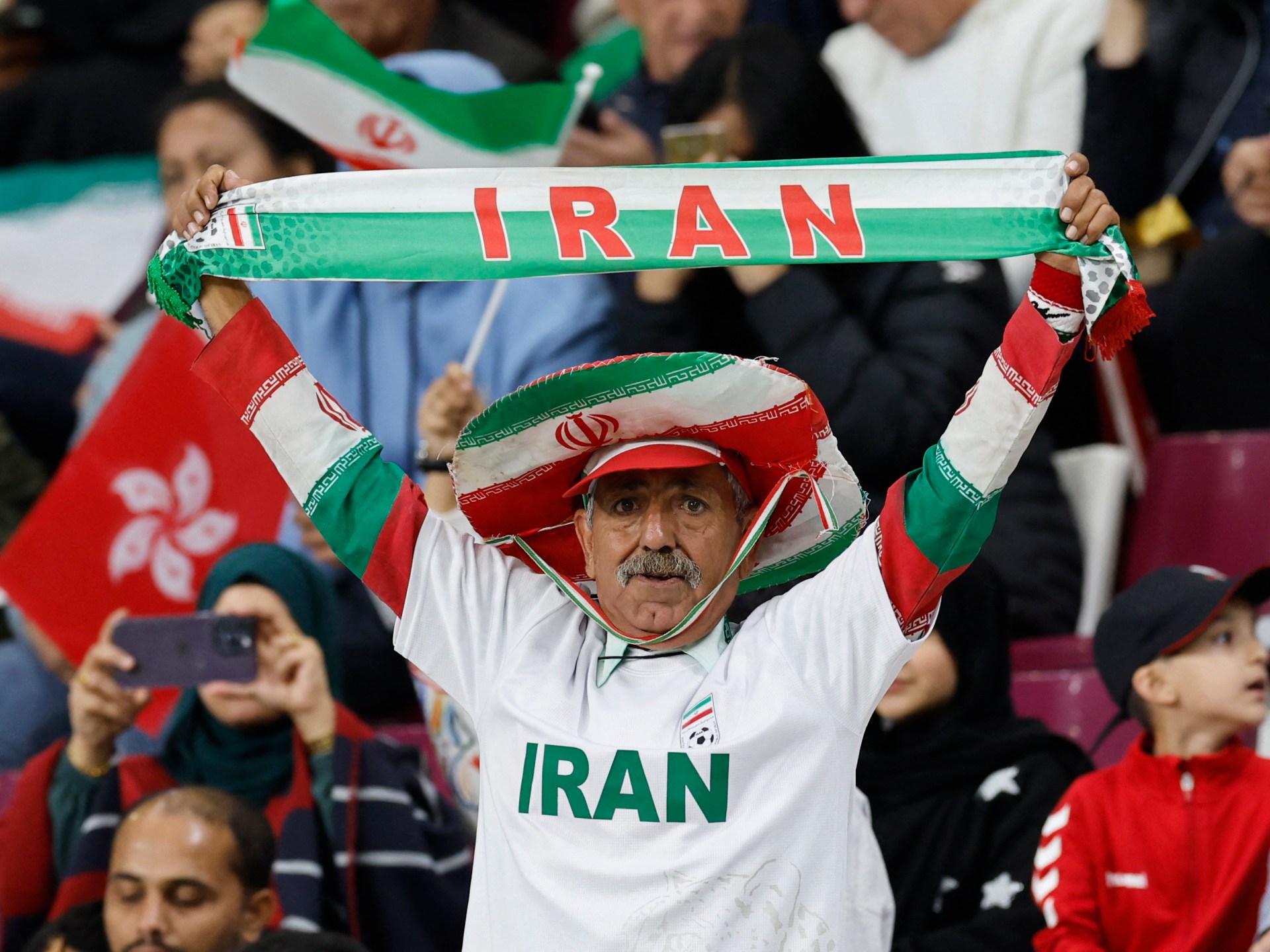
Iran's 2026 World Cup Dilemma: What Happens If They Don't Play?
The FIFA World Cup is more than just a football tournament; it's a global spectacle, a celebration of national pride, and a stage where sporting dreams are realized. For a football-loving nation like Iran, participation in this quadrennial event is a monumental achievement, consistently uniting millions of passionate fans. As the 2026 World Cup approaches, however, an unsettling question lingers in the minds of supporters and analysts alike: What would truly happen if Iran, for whatever reason, were unable or unwilling to play in the 2026 World Cup? The implications of Iran not playing in the World Cup are vast, touching upon sporting integrity, geopolitical dynamics, and the very fabric of global football governance.
While the prospect remains a hypothetical one, the discussions surrounding it are very real, often fueled by Iran's complex international standing and past interactions with global sporting bodies. Understanding the potential scenarios and their ripple effects is crucial for anyone following the beautiful game and its intersection with world affairs.
The Specter of Non-Participation: Why the Concern?
The possibility of Iran not playing in the World Cup stems from a confluence of factors, many of which have plagued Iranian football's relationship with FIFA and the international community over the years. These aren't new concerns, but they gain renewed urgency as major tournaments draw near.
- Political Interference: FIFA's statutes are unequivocal: national football associations must remain independent of government interference. Iran has faced scrutiny in the past regarding alleged government influence over the Iranian Football Federation (IFF). Should FIFA deem such interference to be ongoing or significant, it could lead to sanctions, including suspension or an outright ban. This isn't unique to Iran; many nations have faced FIFA's wrath for similar breaches.
- Human Rights Concerns: Issues surrounding stadium access for women in Iran have been a persistent point of contention with FIFA. While some progress has been made, inconsistent implementation or a rollback of access could trigger international condemnation and potentially a response from FIFA, which has increasingly integrated human rights considerations into its policies.
- Geopolitical Tensions and Sanctions: While less likely to directly result in Iran not playing in the World Cup (as sporting boycotts are rare from FIFA itself), broader international sanctions or severe geopolitical escalations could create an environment where participation becomes logistically challenging, financially untenable, or politically undesirable for Iran or other participating nations. Travel restrictions, financial transaction difficulties, or even security concerns could indirectly impact their ability to compete.
- Internal Unrest or Decision: In extreme circumstances, internal political or social upheaval within Iran could lead to a unilateral decision by the country to withdraw from international competitions, or create a situation where their participation is deemed impossible by the state.
The path to the 2026 World Cup is long, with qualification campaigns yet to fully unfold. For the latest updates on Iran's eligibility and participation, it's wise to consult dedicated reports. You can find more details on this topic here: Will Iran Play in the 2026 World Cup? The Latest Update.
FIFA's Stance and Potential Interventions
FIFA's primary mandate is to protect the integrity of football, and this includes ensuring that all member associations adhere to its statutes. If the prospect of Iran not playing in the World Cup arises due to a violation, FIFA has a clear, albeit often complex, protocol.
How FIFA Addresses Breaches:
- Warnings and Dialogue: Typically, FIFA first engages in dialogue with the national federation, issuing warnings and setting deadlines for compliance. This phase aims to resolve issues without punitive measures.
- Suspension: If warnings are unheeded, FIFA's Council can impose a temporary suspension. A suspended federation loses all membership rights, meaning its national teams and clubs cannot participate in international competitions, and it loses funding from FIFA. This is a common tool used to pressure associations into compliance.
- Outright Ban: In severe or protracted cases of non-compliance, a full ban can be imposed. This is a more permanent and drastic measure, usually reserved for situations where a federation is completely unwilling or unable to meet FIFA's requirements.
Historically, FIFA has suspended numerous federations for government interference (e.g., India, Kuwait, Guatemala in various periods). Russia, for example, faced a blanket ban from all FIFA and UEFA competitions following geopolitical events, though this was a unique case involving direct conflict rather than internal federation governance issues.
What Happens to a Qualification Spot?
If Iran were to qualify but then be banned or withdraw, FIFA would have to make a decision regarding their slot. Several options exist:
- Replacement: The spot could be offered to the next-best team from Iran's qualification group or confederation (AFC). This is a common approach in other sports tournaments.
- Reduced Group Size: If the decision comes very late, FIFA might opt to have a group with one fewer team, though this is less ideal for the tournament structure.
- Play-off: A special play-off could be arranged between deserving teams from the same or even different confederations, though this is less likely for a direct qualification spot.
The ultimate decision would lie with the FIFA Council, taking into account the timing of the event and the specific circumstances surrounding Iran not playing in the World Cup.
Ripple Effects: Who Loses If Iran Doesn't Play?
The absence of Iran from the 2026 World Cup would send reverberations far beyond the borders of the country itself. The stakeholders are many, and the losses would be significant.
-
For Iranian Football and Fans:
- Heartbreak: For millions of passionate Iranian fans, players, and coaches, it would be an immense disappointment, shattering dreams and denying a crucial national rallying point.
- Development Setback: A ban would sever Iranian football from the international ecosystem, impacting player development, coaching education, and access to international competitions and funding.
- Financial Impact: The IFF would lose vital income from FIFA grants, participation fees, and the commercial opportunities associated with World Cup presence.
-
For Asian Football (AFC):
- Loss of a Strong Contender: Iran is consistently one of Asia's top teams. Their absence would diminish the overall strength and representation of the AFC at the global showpiece.
- Reputational Damage: A high-profile ban of an AFC member could cast a shadow over the confederation's governance and stability.
-
For FIFA and the World Cup:
- Loss of Global Reach: The World Cup prides itself on global inclusivity. The absence of a nation with such a deep footballing culture would detract from this ideal.
- Political Ramifications: Any ban, especially one rooted in political or human rights issues, places FIFA in a difficult spotlight, forcing it to balance sporting principles with geopolitical realities.
- Commercial Impact: While perhaps minor in the grand scheme, the absence of a large, fervent fanbase can slightly impact viewership and marketing opportunities.
-
For Competing Teams:
- Reshuffling: A late withdrawal or ban would necessitate changes to group draws or qualification pathways, creating logistical headaches.
- Altered Competition: While some might see an "easier" path, the overall quality and diversity of the competition might be slightly diminished without one of Asia's footballing giants.
The complexities surrounding Iran's participation require a deep dive into the historical context and ongoing dialogues. For a comprehensive overview of the situation, read Understanding Iran's 2026 World Cup Participation Situation.
Navigating the Uncertainty: What Does This Mean for Fans and Football?
For football fans globally, and particularly for those in Iran, the uncertainty surrounding their national team's World Cup fate can be agonizing. The dream of seeing their team compete on the biggest stage is a powerful one, transcending political divides and offering moments of shared joy.
Practical Tips for Staying Informed:
- Follow Official Channels: Always prioritize information from official FIFA and AFC statements, as well as reliable, independent sports news outlets.
- Understand the Nuances: Discussions around potential bans are often complex. Try to understand the specific rules and precedents FIFA applies, rather than relying on speculation.
- Advocate for Sporting Values: Regardless of personal politics, the ideal of football is one of fair play, inclusivity, and participation based on sporting merit, free from undue interference.
Ultimately, the hope is always for a resolution that allows nations to compete on the field of play. Football has a unique power to unite, to offer escape, and to inspire. The absence of any nation, especially one with such a rich footballing heritage as Iran, would be a loss for the tournament and for the global football family.
Conclusion
The question of what happens if Iran doesn't play in the 2026 World Cup is more than just a hypothetical thought experiment; it's a sobering reminder of the delicate balance between sport, politics, and governance. While the Iranian national team, Team Melli, has consistently proven its prowess on the pitch, external factors often cast a long shadow over its international aspirations. FIFA's role in upholding its statutes, coupled with the geopolitical realities surrounding Iran, means that the road to 2026 may be fraught with challenges. For the sake of the game and its universal appeal, all eyes will be on the developments, with the hope that all eligible nations, including Iran, will have the opportunity to compete for football's ultimate prize, showcasing their talent and uniting their fans on the world stage.